The world is improving.
So why does it feel like
it's falling apart?
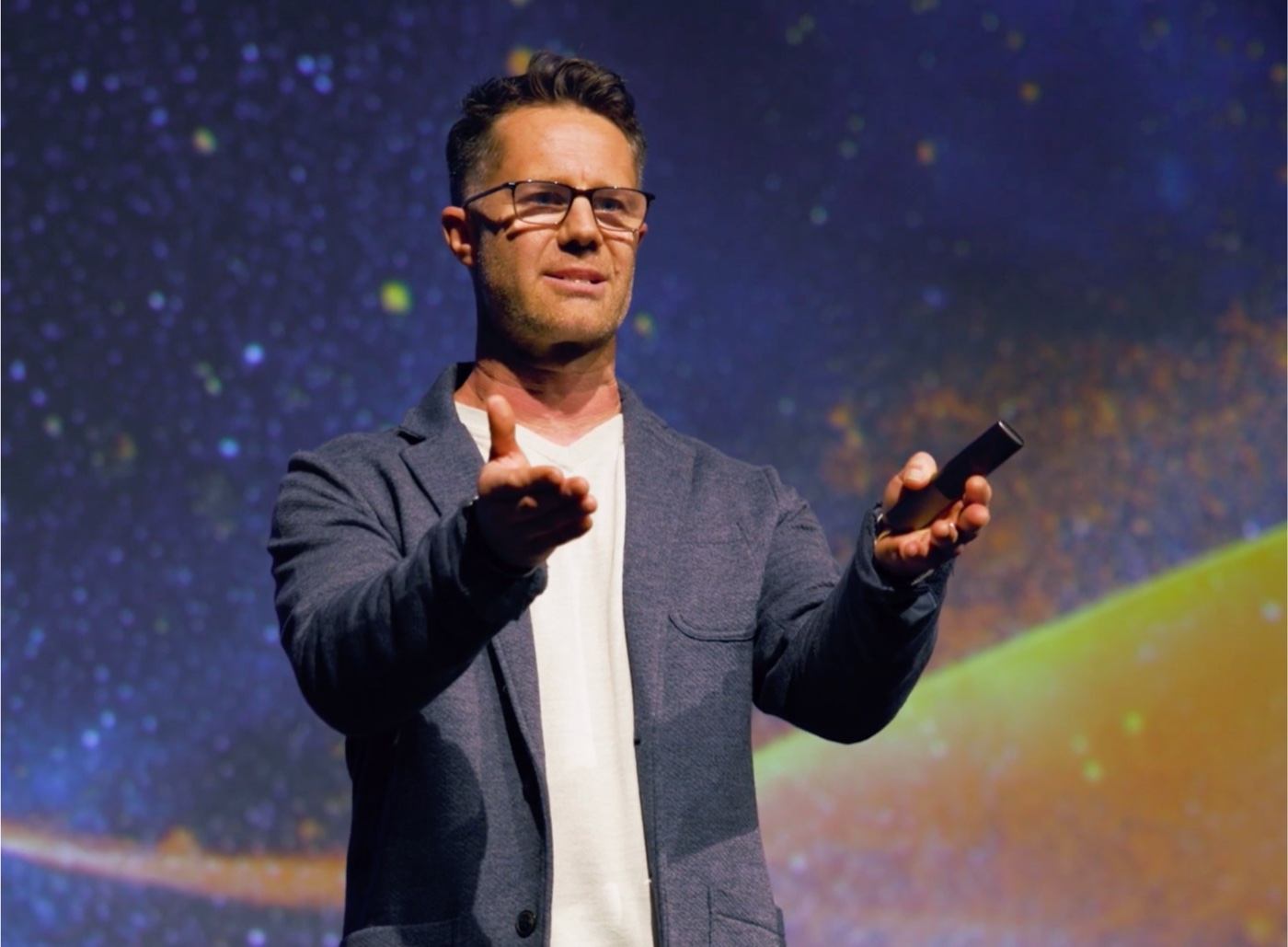
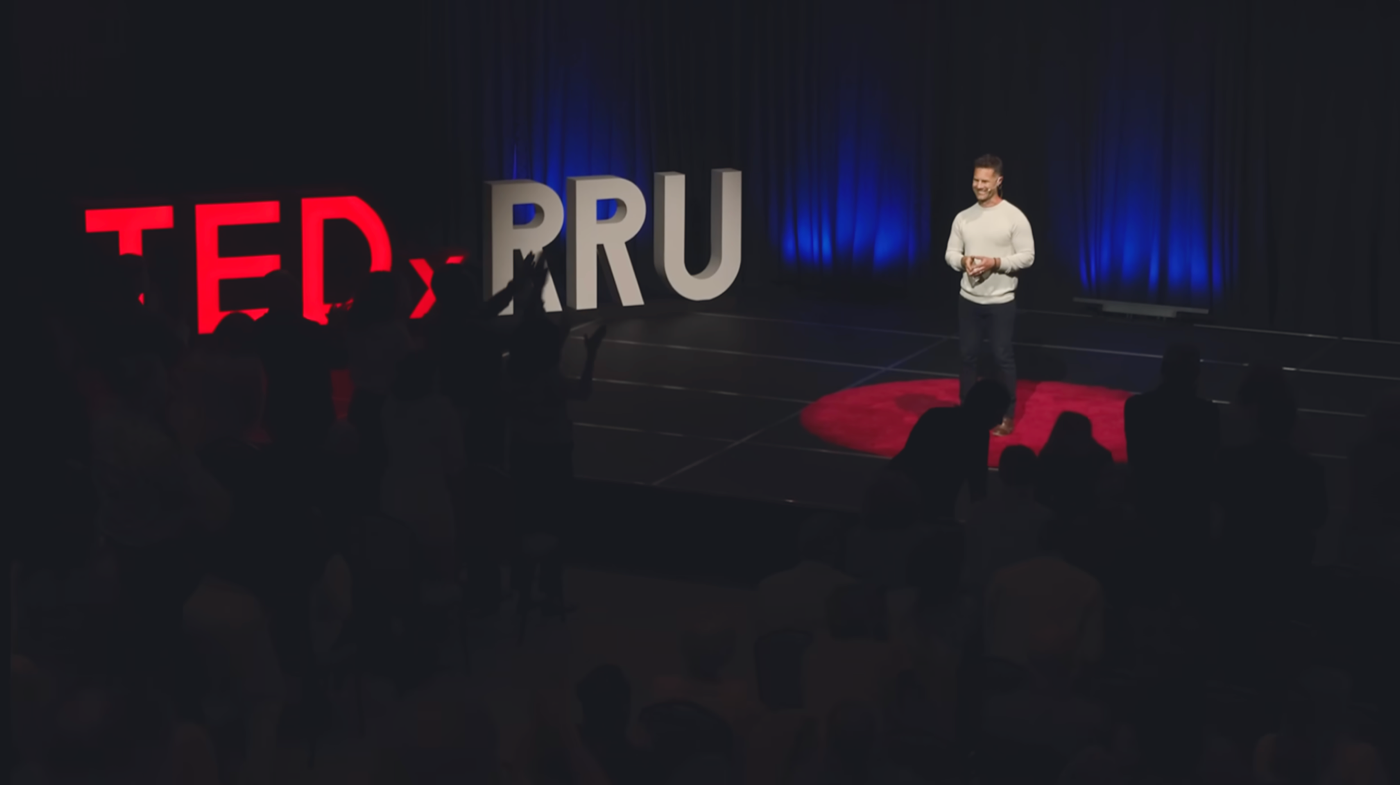
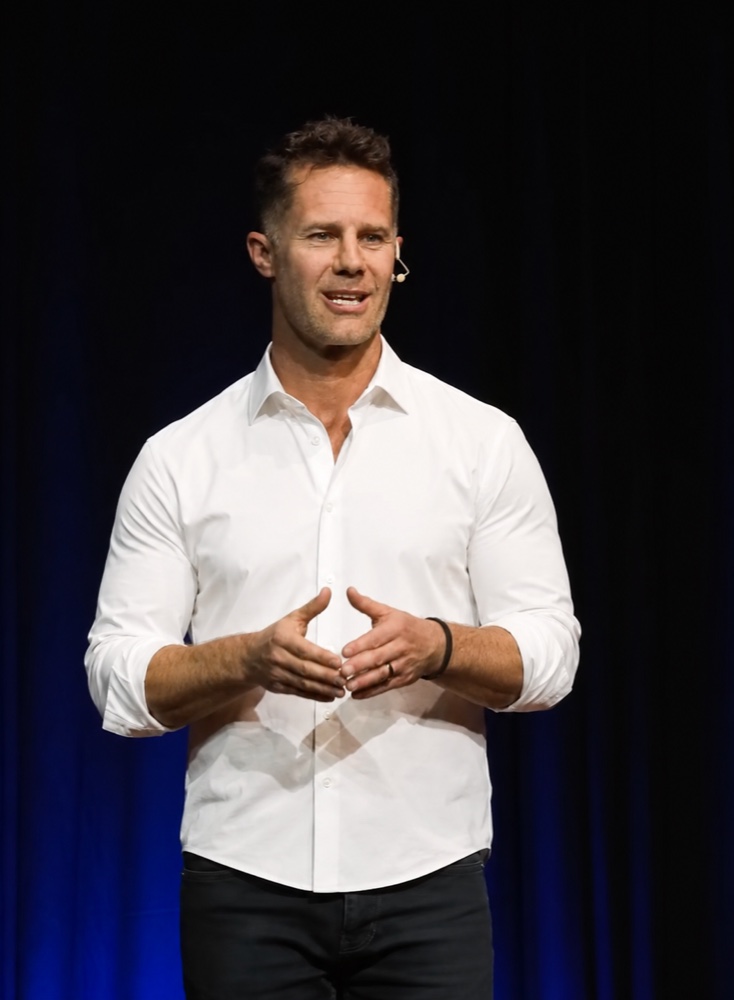
A track record built on stages, screens, and standing ovations.
Real progress exists. Most people never hear about it.
Seven years ago, his heart stopped.
One of the first responders who helped bring him back was a former student.
It changed the way he thinks about hope, agency, and what we prepare people for.
Read Graeme's story →
of how their own feed shapes what they believe is possible
and trusted sources for a healthier feed
on reality, and the clarity and agency that comes with it
Half Day
From $15,000 CAD + travel
A deeper, interactive half day: the keynote, plus small-group work where your team looks hard at what's actually in their news diet, and how it's quietly shaping the way they see each other, the work, and what's possible.
Remote delivery
From $5,000 CAD
The same keynote experience, delivered remotely for distributed teams.
Rates flexible for nonprofits and schools — ask about options.
Multi-day and retreat formats available on request.
You've seen progress stats before, maybe in a book, maybe in a TED talk. What you haven't seen is a room prove to itself, live, that it doesn't believe them. The data below isn't the point of the talk. It's the receipt.
Source: UN Inter-agency Group for Child Mortality Estimation
Source: World Bank / Our World in Data
Source: Ember / International Energy Agency
Two companion keynotes, drawn from the same framework, tailored for early-career and leadership audiences.
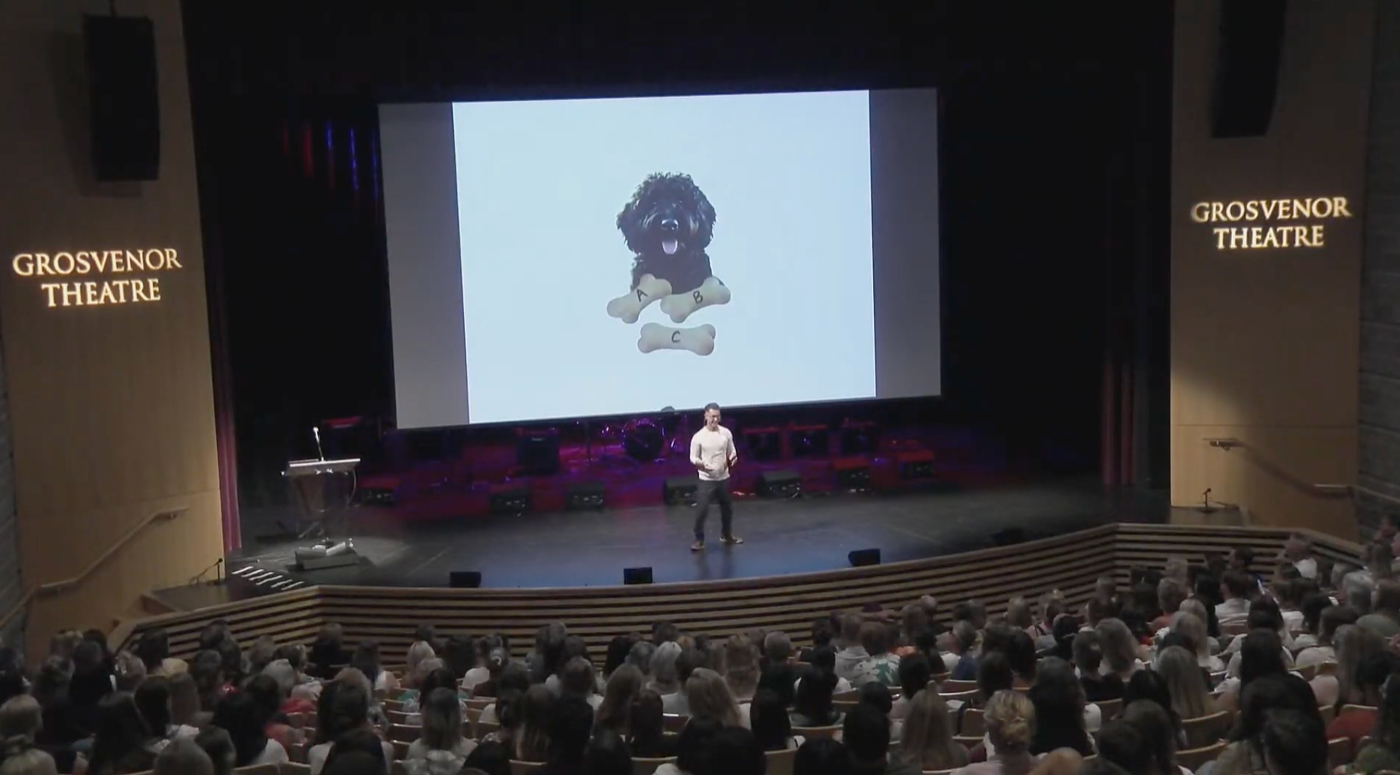
Every session opens with a live, nine-question quiz on the real state of the world, benchmarked against random chance, represented by Graeme's dog, Rosie. Most rooms score worse than she does.
Other speakers in this space tell audiences their thinking is biased. This one proves it on the spot, before a single slide of theory, then hands them a framework to change it before they've left their seats.
Three questions. Three choices each. Random chance scores 1/3.
Every claim on stage is sourced, not vibes — peer-reviewed research on negativity bias, cognition, and media effects.
The hope gap isn't asserted, it's demonstrated in a live audience experiment, on the spot, every time.
Refined by feedback after every session, with repeat bookings from the same organizations.
No ideology to push. The argument lives or dies on the evidence.
"Jonathan Haidt explains what's happening to young people. Graeme Mitchell explains what we can do about it."
Joanna Linger, ISTE Attendee
"Graeme captivated the entire room. The feedback has been overwhelmingly positive, and it is already shaping how we think about our work moving forward."
Jason Earnshaw, Director — SISP
"Graeme doesn't offer false hope. He offers a clearer picture of reality. That's far more powerful."
Ronato Pama, Wellness Director, Saanich
"People left feeling encouraged, grounded, and hopeful."
Dr. Chris Kennedy, CEO — West Vancouver
REBOOKED"The best presentation our association has had in ages."
Dr. Balan Moorthy, Board Director — BC School Superintendents Association
REBOOKED"In a time when we all feel overwhelmed by negativity, Graeme reminded us that better inputs lead to better thoughts and better actions. Attendees said it transformed their mindset and left them excited with a renewed focus on connection, curiosity, and hope. Graeme is a truly inspirational speaker."
Lindsay Willms, BCTEN Conference Organizer — Simon Fraser University
REBOOKED
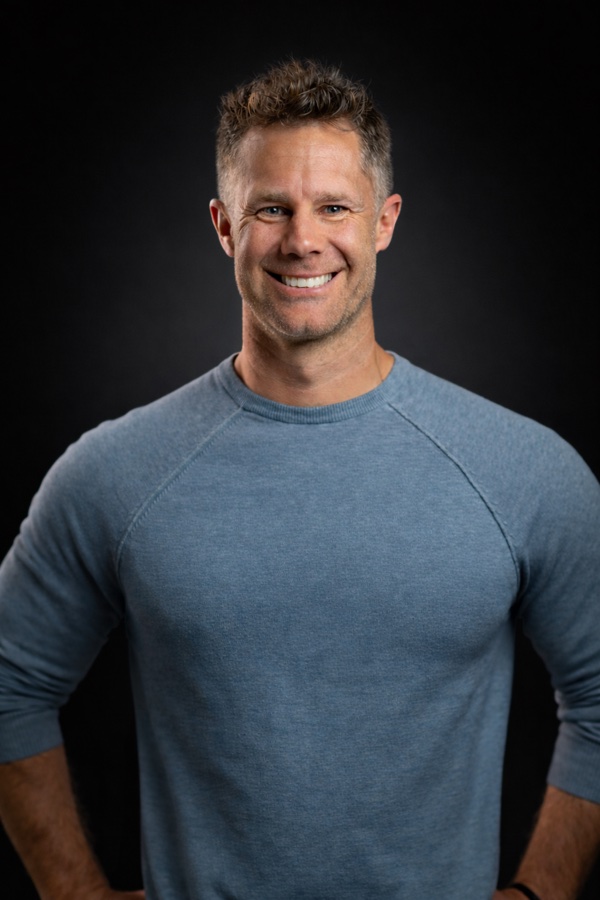
Seven years ago, Graeme's heart stopped. He's alive today because his wife knew CPR, and because the first responders who arrived included one of his own former students. He's built the rest of his career around a hard-won belief: hope isn't naive. It's a decision, backed by evidence, that changes what happens next.
That belief became The Hope Gap. Graeme's central question cuts through the noise: what if the world isn't getting worse, but our perception of it is?
Every keynote opens with a live audience experiment revealing the room's own negativity bias in real time. The Hope Gap isn't explained, it's proven. On stage, that's high energy, sharp humor, and a room that's fully with him from the first minute.
The material gets tested before it's ever polished. Graeme still teaches university students and high schoolers in the IGS classroom he co-founded — the toughest audience there is, and the first place the Hope Gap showed up. Whatever survives that room is ready for any stage.
When he's not teaching or on stage, he's likely losing a pickleball match to one of his kids on the court they painted on the road, or out on a hiking trail. He lives in Victoria, BC, with his wife Elisa and their three kids, and, of course, Rosie.
Tell me about your event
We customize the experience
I take care of the rest.
Everything you need, ready to download.
A single page with pricing, proof, and booking details at a glance.
Graeme's full background and speaking credentials.
Ready-to-use introduction script for your emcee.
High-quality photo for promotional use.
Key themes Graeme speaks about, tailored for your audience.
Send a few details below and I'll be in touch within 48 hours.
Proof, live on stage, that the world is better than your feed says. A room that leaves believing it.
KEYNOTES · WORKSHOPS · LEADERSHIP EXPERIENCES
Working with a speaker bureau or agent? Standard commission honored — reach out to discuss representing this engagement.
Graeme is a featured pilot teacher in Fix The News' Schools program.
© 2026 Dr. Graeme Mitchell. All rights reserved.
LinkedInChartwell SpeakersSpeakers Bureau of CanadaPrivacy Policy